
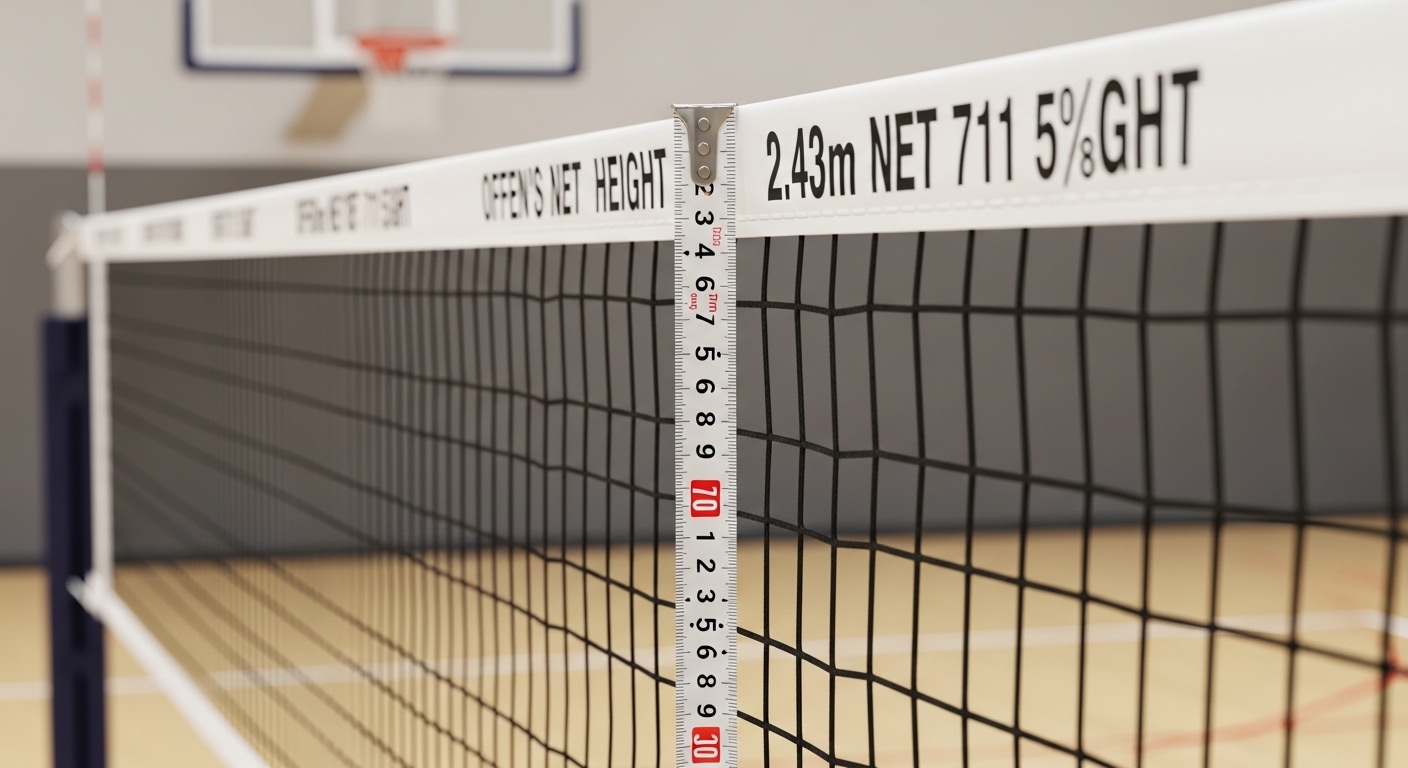
Volleyball is a globally popular sport known for its fast pace, teamwork, and exciting rallies. One of the most important elements of the game is the volleyball net height, which directly affects gameplay, strategy, and fairness on the court. The height of the net determines how players attack, block, and defend during a match. Different levels of competition, including men’s, women’s, and youth volleyball, use specific measurements to ensure balanced play. Understanding volleyball net height is essential for players, coaches, and organizers who want to follow official rules and maintain proper playing conditions during training sessions and competitive matches.
The Standard Volleyball Net Height in Official Competitions
The volleyball net height used in official competitions follows specific international standards to maintain fairness and consistency in the sport. For adult men’s competitions, the standard height is set at 2.43 meters, while women’s competitions use a slightly lower net height of 2.24 meters. These measurements are taken from the center of the court where the net crosses the playing area. The purpose of having different heights is to create balanced competition based on average physical attributes. Maintaining the correct volleyball net height ensures that players compete under equal conditions and that matches follow the rules recognized by global volleyball organizations.
Why Volleyball Net Height Matters in Gameplay
Volleyball net height plays a crucial role in shaping how the game is played. The height influences how players spike the ball, perform blocks, and defend against attacks. If the net is too low, offensive plays become easier and the game may lose its competitive balance. If the net is too high, rallies may become slower and scoring opportunities could decrease. The correct volleyball net height ensures that players must use proper technique, timing, and jumping ability to succeed. This balance keeps matches exciting while encouraging skill development and strategic teamwork on both sides of the court.
Differences Between Men’s and Women’s Net Height
One notable aspect of volleyball rules is the difference between men’s and women’s volleyball net height. These variations exist to create fair competition by considering physical differences in average height and jumping ability. The slightly lower net in women’s volleyball still demands strong athletic skills while allowing players to execute powerful attacks and effective blocks. Despite the height difference, both versions of the sport maintain the same level of excitement and intensity. Adjusting the volleyball net height according to competition categories ensures that the game remains challenging while allowing athletes to perform at their highest potential during matches.
Volleyball Net Height for Youth and Junior Players
Youth and junior volleyball competitions use adjusted net measurements to support developing athletes. Younger players typically compete with a lower volleyball net height so they can learn the basic skills of serving, passing, setting, and attacking effectively. Lower nets help beginners experience success while building confidence and improving their technique. As players grow older and stronger, the net height gradually increases to match official standards used in adult competitions. This gradual progression allows young athletes to adapt physically and technically, ensuring that they develop proper skills before transitioning to higher levels of competitive volleyball.
How Volleyball Net Height Is Measured on the Court
Measuring the volleyball net height correctly is important to ensure that matches follow official rules. The measurement is taken from the center of the court where the net crosses the playing area. Because nets can sometimes sag slightly, referees and organizers also check that the height near the sidelines does not exceed the allowed limit. Accurate measurement tools such as measuring rods or tape measures are often used before matches begin. Properly checking the volleyball height ensures fairness for both teams and prevents disputes during competition. Consistent measurements help maintain professional standards in organized volleyball events.
Equipment Used to Maintain Proper Net Height
Maintaining the correct volleyball height requires reliable equipment and proper installation. Volleyball nets are typically supported by strong poles placed on both sides of the court. Adjustable tension cables or straps are used to keep the net tight and positioned at the correct level. Many modern volleyball systems include height adjustment mechanisms that allow organizers to quickly change the net height for different competition categories. Using well designed equipment helps prevent sagging and keeps the net stable during play. Properly maintained equipment ensures that the volleyball height remains accurate throughout training sessions and official matches.
The Impact of Net Height on Player Strategy
The volleyball height significantly influences the strategies teams use during a match. Offensive players must consider the height when planning spikes and quick attacks, while defenders focus on timing their blocks effectively. Taller players often specialize in blocking and attacking near the net because their reach provides a natural advantage. Meanwhile, defensive specialists concentrate on passing and backcourt coverage. Because the net height remains fixed during a match, teams must adapt their strategies to overcome this challenge. Understanding how volleyball height affects gameplay helps coaches design training programs that improve jumping ability, coordination, and tactical awareness.
Volleyball Net Height in Recreational Play
In recreational volleyball, players sometimes adjust the volleyball height depending on the group’s skill level and preferences. Casual games at parks, beaches, or schools often involve participants with different abilities and ages. Lowering the net slightly can make the game more accessible and enjoyable for beginners or mixed groups. However, many recreational leagues still aim to follow official standards so players can experience authentic gameplay. Whether played competitively or casually, maintaining a suitable volleyball height helps ensure that everyone enjoys a fair and engaging game while learning the fundamental skills of volleyball.
Training Methods to Adapt to Official Net Height
Athletes preparing for competitive volleyball often train specifically to perform well at the official volleyball net height. Coaches design exercises that focus on improving jumping strength, timing, and coordination. Plyometric drills, strength training, and repeated attack practice help players develop the ability to spike and block effectively at regulation height. Training sessions may also include simulated match situations to help athletes adapt their strategies. By practicing regularly under correct conditions, players become more confident and comfortable during real competitions. Consistent training allows athletes to overcome physical challenges and perform successfully when facing the standard volleyball height.
Conclusion
The volleyball height is a fundamental element that shapes the structure and fairness of the sport. From professional tournaments to youth competitions and recreational games, the correct net measurement ensures balanced gameplay and encourages skillful performance. Understanding the standards for men’s, women’s, and junior volleyball helps players and organizers create proper playing environments. Accurate measurement, reliable equipment, and focused training all contribute to maintaining the correct net height during matches. By respecting these guidelines, athletes can fully experience the excitement and challenge of volleyball while competing under fair and consistent conditions on the court.