
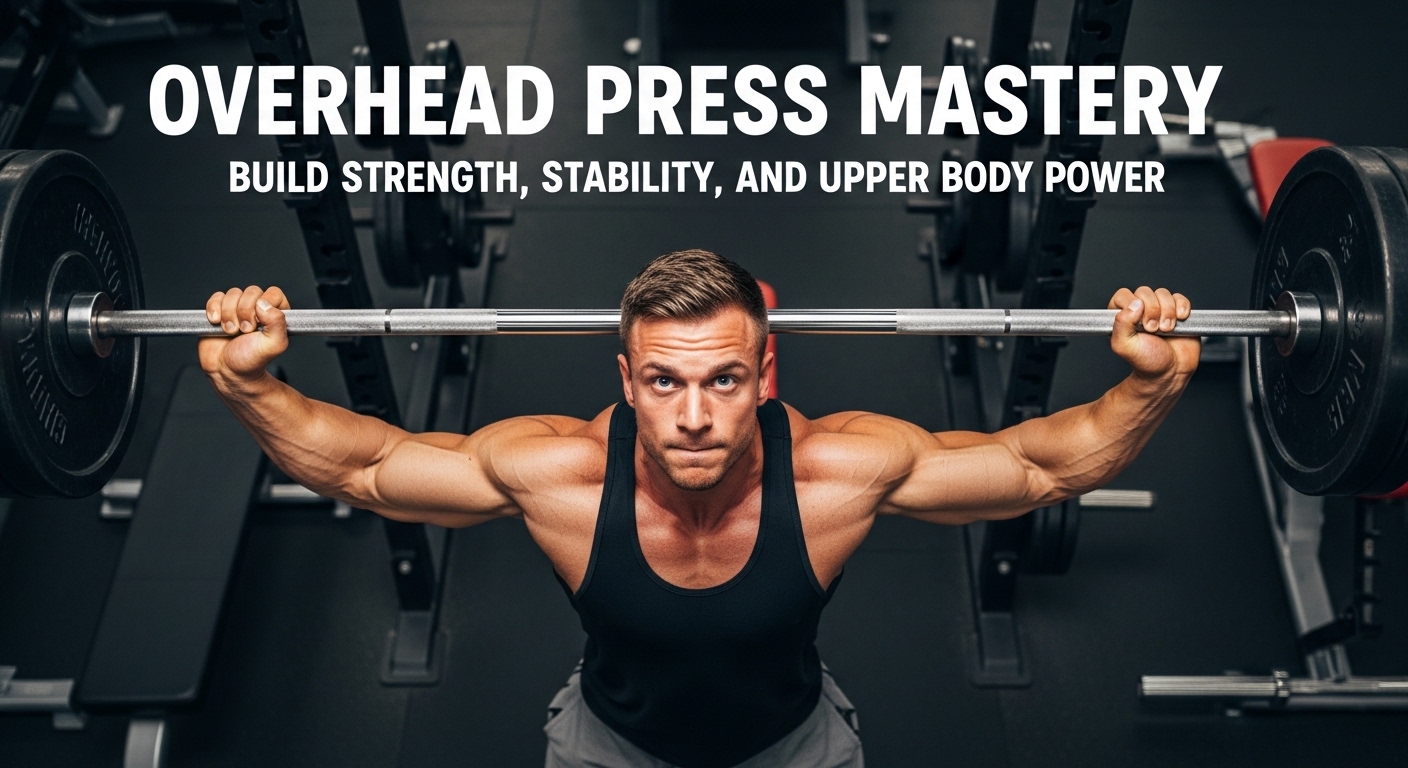
The overhead press is a fundamental strength training exercise that plays a vital role in building upper body power and stability. It is widely used by athletes, fitness enthusiasts, and beginners who want to develop strong shoulders and improve functional movement. This exercise involves pressing a weight upward from shoulder level until the arms are fully extended, engaging multiple muscle groups at once. Its simplicity and effectiveness make it a staple in many workout routines. Understanding how to perform the overhead press correctly can help you achieve better results and reduce the risk of injury over time.
What Is the Overhead Press
The overhead press is a compound exercise that primarily targets the shoulders while also engaging the arms and core. It involves lifting a barbell or dumbbells from shoulder height to a position directly above the head. This movement requires coordination and strength, as multiple muscle groups work together to stabilize and control the weight. The overhead press is often performed standing, which increases core activation and balance. Its straightforward nature makes it accessible to people at different fitness levels, while still offering significant benefits for strength and overall physical development.
Muscles Worked During the Overhead Press
The overhead press activates several important muscle groups that contribute to upper body strength. The primary muscles involved are the deltoids, which are responsible for lifting the arms overhead. The triceps assist in extending the elbows, while the upper chest provides additional support during the movement. The core muscles play a crucial role in maintaining stability and proper posture. Even the legs and lower back contribute by providing a solid base. This full-body engagement makes the overhead press an efficient exercise for building strength and improving coordination across multiple muscle groups.
Benefits of Including the Overhead Press
Incorporating the overhead press into your workout routine offers a range of physical benefits. It helps build strong and well-defined shoulders, which are essential for many daily activities and sports. The exercise also improves upper body strength, making it easier to perform pushing movements. Additionally, it enhances core stability and posture by requiring proper alignment during the lift. Regular practice of the overhead press can also increase overall muscle coordination and balance. These benefits make it a valuable addition to any strength training program focused on functional fitness and performance.
Proper Technique for Safe Performance
Performing the overhead press with correct technique is essential for maximizing results and preventing injury. Start by positioning the weight at shoulder level with your hands slightly wider than shoulder-width apart. Keep your core engaged and your back straight as you press the weight upward. Avoid arching your lower back, as this can place unnecessary strain on the spine. As you lift, ensure that the weight moves in a straight line above your head. Lower the weight slowly and with control to maintain tension in the muscles. Consistent attention to form leads to better outcomes and long-term progress.
Common Mistakes to Avoid
Many individuals make mistakes when performing the overhead press, which can limit effectiveness and increase the risk of injury. One common error is using excessive weight, which often leads to poor form and reduced muscle engagement. Another mistake is arching the lower back instead of maintaining a stable core, which can strain the spine. Some people also fail to control the movement, rushing through repetitions without proper technique. Incorrect hand placement and uneven lifting can further affect performance. Being mindful of these issues and focusing on controlled, balanced movement can greatly improve results.
Variations of the Overhead Press
The overhead press can be adapted into different variations to suit various fitness levels and goals. The seated overhead press provides more stability and isolates the shoulders, making it ideal for beginners. Dumbbell overhead presses allow for a greater range of motion and help correct muscle imbalances. The push press incorporates leg drive to lift heavier weights, adding a dynamic element to the exercise. Each variation offers unique benefits while maintaining the core movement pattern. Exploring these options can keep workouts engaging and help target muscles in slightly different ways for balanced development.
How to Add Overhead Press to Your Routine
Including the overhead press in your workout routine depends on your training goals and experience level. It can be used as a primary exercise on upper body or shoulder-focused days. Performing it early in your workout ensures that you have enough energy to maintain proper form and lift effectively. Beginners may start with lighter weights and gradually increase resistance as strength improves. More experienced individuals can incorporate heavier sets for strength or moderate weights for muscle growth. Consistency and gradual progression are key to achieving long-term success with this exercise.
Who Should Do the Overhead Press
The overhead press is suitable for a wide range of individuals, from beginners to advanced athletes. It is particularly beneficial for those looking to improve upper body strength, shoulder stability, and overall fitness. Athletes in sports that involve pushing or lifting movements can gain significant performance advantages from this exercise. It is also useful for individuals aiming to improve posture and functional strength. However, those with shoulder or back issues should approach it carefully and consider professional guidance. When performed correctly, the overhead press can be a safe and effective addition to most fitness routines.
Tips for Maximizing Results
To get the most out of the overhead press, focus on consistency, proper form, and gradual progression. Engaging the core throughout the movement helps maintain stability and prevent injury. Breathing correctly, such as exhaling during the pressing phase, can improve performance and control. Increasing weight gradually ensures continuous progress without compromising technique. Adequate rest and recovery are also important for muscle growth and strength development. By paying attention to these factors, you can enhance the effectiveness of the overhead press and achieve better results over time.
Conclusion
The overhead press remains one of the most effective exercises for building upper body strength and improving overall fitness. Its ability to engage multiple muscle groups while promoting stability and coordination makes it a valuable addition to any training program. By understanding proper technique, avoiding common mistakes, and incorporating suitable variations, individuals can maximize the benefits of this exercise. Whether your goal is strength, muscle development, or improved performance, the overhead press offers a reliable and efficient path toward achieving long-term fitness success.