
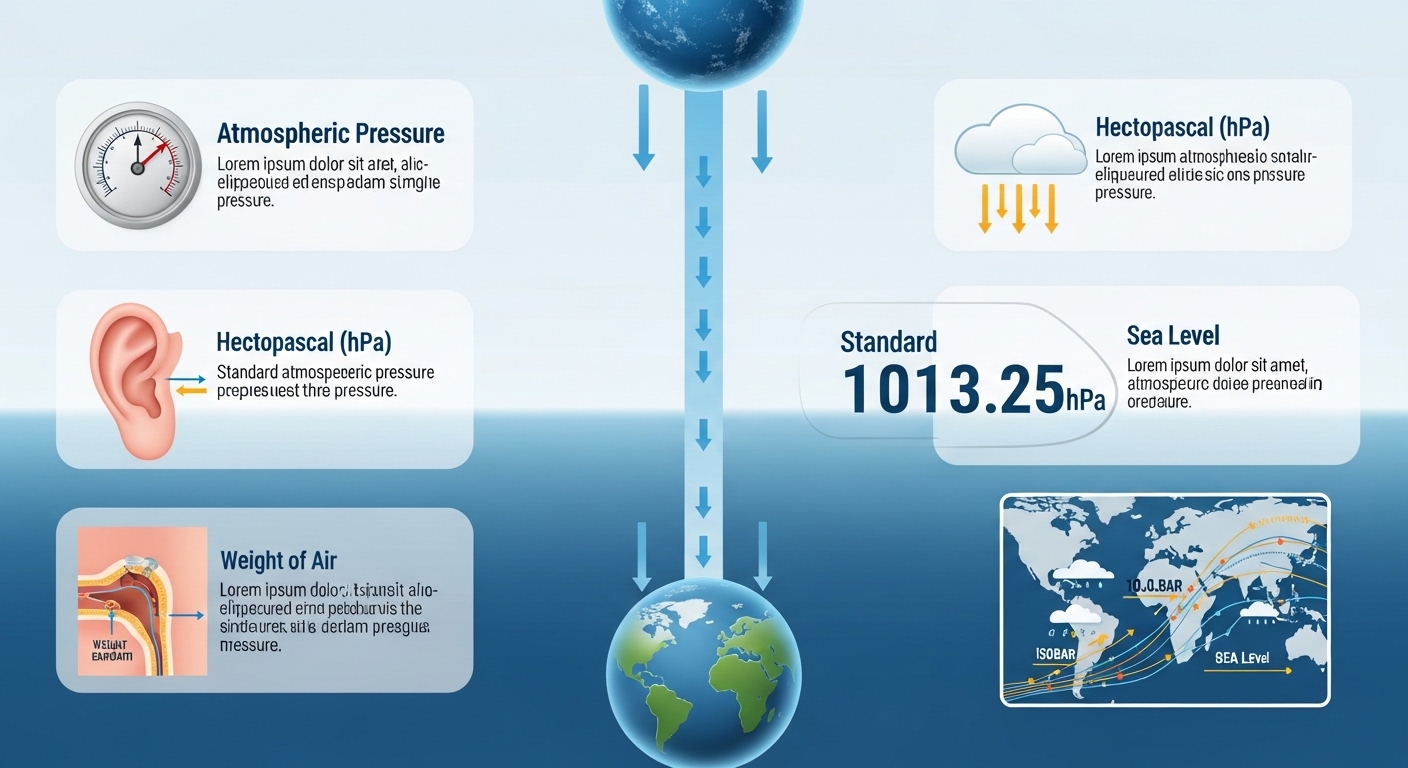
Understanding how atmospheric pressure is measured can help people interpret weather reports more accurately and appreciate the science behind daily forecasts. One commonly used measurement is the hectopascal unit, which plays a vital role in meteorology and environmental studies. Although it may sound technical at first, this unit is widely used around the world to describe air pressure in a clear and standardized way. By learning about the, readers can gain a deeper understanding of how pressure affects weather patterns and why it is essential for forecasting and scientific observation.
What Is the Hectopascal Unit
The hectopascal unit is a metric unit used to measure atmospheric pressure. It is part of the International System of Units and is derived from the pascal, which measures force per unit area. One hectopascal is equal to one hundred pascals, making it a convenient way to express typical atmospheric pressure values. Meteorologists often use this unit because it produces numbers that are easier to read and interpret. For example, average sea-level pressure is about 1013 hectopascals. This standard makes it easier for professionals and the general public to understand pressure readings and compare weather conditions across different regions.
Why the Hectopascal Unit Is Widely Used
The widespread use of the hectopascal unit is mainly due to its practicality and simplicity in representing atmospheric pressure. Unlike smaller units such as pascals, the hectopascal unit provides values that are easier to work with in everyday weather reporting. It has replaced older units like millibars in many countries, although both are numerically equivalent. This consistency allows meteorologists to communicate information clearly across international boundaries. By using a standardized unit, scientists and weather agencies can share data efficiently, ensuring accurate forecasting and better understanding of global weather systems and atmospheric behavior.
Relationship Between Hectopascal and Millibar
The hectopascal unit and the millibar are closely related, and in fact, they are equal in value. One hectopascal is exactly the same as one millibar, which makes conversion between the two straightforward. This equivalence allows for a smooth transition from older measurement systems to modern ones without causing confusion. Many weather maps and reports still use both terms interchangeably. Understanding this relationship helps readers interpret different sources of information without difficulty. It also highlights how scientific measurements evolve over time while maintaining continuity for practical use in meteorology and atmospheric research.
How the Hectopascal Unit Measures Air Pressure
Air pressure is measured using instruments called barometers, and the readings are often expressed in the hectopascal unit. These instruments detect the force exerted by the weight of the air above a specific point. As air pressure changes due to weather conditions, the barometer reflects these variations. High pressure usually indicates clear and stable weather, while low pressure is often associated with clouds and precipitation. The hectopascal unit provides a precise way to record these changes, allowing meteorologists to track atmospheric patterns and make accurate predictions about upcoming weather conditions.
Importance of Hectopascal Unit in Weather Forecasting
The hectopascal unit plays a crucial role in weather forecasting by helping meteorologists analyze atmospheric pressure patterns. Changes in pressure are key indicators of weather shifts, such as storms, winds, and temperature variations. By studying these changes, experts can predict weather events and issue warnings when necessary. The use of the hectopascal unit ensures consistency in data collection and interpretation. This allows for more reliable forecasts and better communication of weather information to the public. Accurate pressure measurements are essential for understanding how different weather systems develop and interact with each other.
Understanding High and Low Pressure Systems
High and low pressure systems are fundamental concepts in meteorology, and they are measured using the hectopascal unit. High-pressure systems typically have readings above average levels and are associated with calm and clear weather. In contrast, low-pressure systems have lower readings and often bring clouds, rain, and storms. By monitoring these systems, meteorologists can predict changes in weather conditions. The hectopascal unit provides a clear and standardized way to identify these differences. Understanding how pressure systems work helps individuals make informed decisions about daily activities and prepare for changing weather conditions effectively.
Global Standardization of Pressure Measurement
The adoption of the hectopascal unit reflects the global effort to standardize scientific measurements. By using a common unit, countries can share data and collaborate more effectively in studying atmospheric conditions. This standardization is particularly important in aviation, shipping, and environmental monitoring, where accurate pressure readings are essential for safety and efficiency. The hectopascal unit ensures that information is consistent and easily understood across different regions. This global approach supports better communication and coordination, allowing scientists and professionals to address weather-related challenges on an international scale.
Applications Beyond Weather Forecasting
Although the hectopascal unit is primarily associated with meteorology, it also has applications in other fields. In aviation, it is used to measure altitude and ensure safe navigation. Environmental scientists use it to study atmospheric changes and climate patterns. It is also important in engineering and physics, where pressure measurements are required for various calculations. The versatility of the hectopascal unit makes it a valuable tool in many areas of science and technology. Its consistent use across different disciplines highlights its importance as a reliable and practical measurement unit.
How to Interpret Hectopascal Readings Easily
Interpreting readings in the hectopascal unit becomes easier with a basic understanding of typical pressure ranges. Average sea-level pressure is around 1013 hectopascals, and values significantly above or below this level indicate changing weather conditions. A rising pressure trend usually suggests improving weather, while falling pressure may signal approaching storms. By observing these patterns, individuals can gain insight into short-term weather changes. The simplicity of the hectopascal unit allows even non-experts to understand pressure readings with minimal effort. This makes it an accessible and useful tool for anyone interested in weather and atmospheric science.
Conclusion
The hectopascal unit is an essential part of modern meteorology and plays a key role in measuring and understanding atmospheric pressure. Its simplicity, accuracy, and global acceptance make it a valuable tool for scientists, weather professionals, and the general public. By learning how this unit works and how to interpret its readings, individuals can better understand weather patterns and make informed decisions. From forecasting to aviation and environmental studies, the hectopascal unit continues to support important scientific and practical applications, making it a fundamental component of atmospheric measurement systems worldwide.