
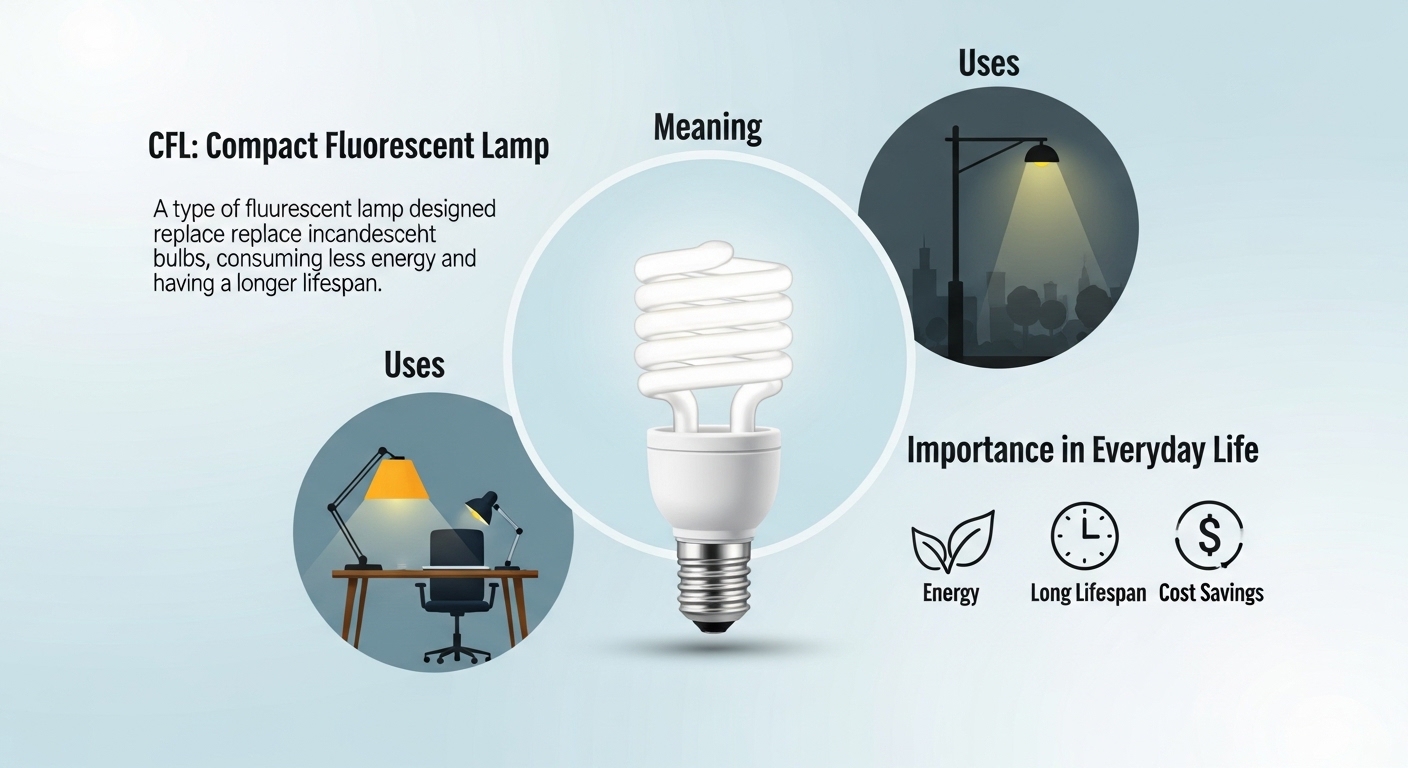
Understanding the CFL full form is essential for anyone interested in energy-efficient lighting and modern electrical solutions. CFL stands for Compact Fluorescent Lamp, a technology that transformed how people light their homes and workplaces. These lamps were designed to provide better energy efficiency compared to traditional incandescent bulbs, while also offering longer lifespan and reduced electricity consumption. Over time, CFLs became widely used across the world due to their cost-saving benefits and environmental advantages. Exploring the meaning, working principle, and applications of CFL helps in understanding their role in shaping energy-conscious lifestyles.
What Is the CFL Full Form and Its Basic Meaning
The CFL full form is Compact Fluorescent Lamp, which refers to a type of light bulb that uses fluorescent technology in a compact design. Unlike long tube lights, CFLs are shaped to fit into standard light fixtures, making them convenient for everyday use. They operate by passing an electric current through a gas-filled tube, producing ultraviolet light that is then converted into visible light. This efficient process allows CFLs to use less energy while providing sufficient brightness. Their compact size and improved performance made them a popular alternative to traditional lighting options for many years.
History and Development of CFL Technology
The development of Compact Fluorescent Lamps marked a significant advancement in lighting technology. The concept of fluorescent lighting dates back to the early twentieth century, but it took time to create a compact version suitable for household use. Engineers worked to reduce the size of fluorescent tubes while maintaining efficiency and performance. By the late twentieth century, CFLs became commercially available and quickly gained popularity. Their introduction was driven by the need for energy-saving solutions during periods of rising electricity demand. Over time, improvements in design and materials made CFLs more reliable and accessible to consumers worldwide.
How Compact Fluorescent Lamps Work
Understanding how CFLs function provides insight into why the CFL full form is associated with efficiency. These lamps contain a small amount of mercury vapor and an inert gas inside a glass tube. When electricity flows through the tube, it excites the mercury atoms, producing ultraviolet light. This ultraviolet light then interacts with a phosphor coating inside the tube, converting it into visible light. This process is more efficient than the filament-based method used in incandescent bulbs. As a result, CFLs produce more light while consuming less energy, making them a practical choice for energy-conscious users.
Energy Efficiency and Cost Savings
One of the main reasons people search for the CFL full form is to understand its energy-saving benefits. Compact Fluorescent Lamps use significantly less electricity compared to traditional bulbs, which helps reduce energy bills. They also have a longer lifespan, meaning they do not need to be replaced as often. This combination of lower energy consumption and durability results in long-term cost savings. For households and businesses, switching to CFL lighting was once an effective way to improve efficiency. Although newer technologies have emerged, CFLs still represent an important step in the evolution of energy-efficient lighting solutions.
Environmental Impact of CFL Lighting
The environmental impact of CFL lighting is an important aspect linked to the CFL full form. By consuming less electricity, these lamps help reduce carbon emissions associated with power generation. This makes them more environmentally friendly compared to traditional incandescent bulbs. However, CFLs contain a small amount of mercury, which requires careful disposal to prevent environmental harm. Recycling programs and proper waste management are essential to minimize risks. Despite this concern, the overall environmental benefits of reduced energy consumption have made CFLs a significant contributor to sustainable lighting practices over the years.
Common Applications of CFL Lamps
CFL lamps have been widely used in various settings, making the CFL full form relevant in everyday life. They are commonly found in homes, offices, schools, and commercial spaces where efficient lighting is needed. Their ability to fit into standard sockets makes them suitable for replacing traditional bulbs without requiring major changes. CFLs are also used in outdoor lighting, although their performance can vary in extreme temperatures. Their versatility and energy efficiency made them a preferred choice for many years, especially during the transition from conventional lighting to more advanced technologies.
Advantages and Limitations of CFLs
Exploring the advantages and limitations helps provide a balanced understanding of the CFL full form. On the positive side, CFLs offer energy efficiency, longer lifespan, and reduced electricity costs. They also produce less heat compared to incandescent bulbs. However, they have some drawbacks, including the presence of mercury and a slight delay in reaching full brightness. Additionally, frequent switching on and off can reduce their lifespan. Despite these limitations, CFLs played a crucial role in promoting energy conservation and encouraging the adoption of more efficient lighting solutions in households and industries worldwide.
Comparison with LED Technology
As lighting technology evolved, LEDs began to replace CFLs in many applications. Comparing these technologies helps clarify the relevance of the CFL full form today. LEDs are more energy-efficient, have longer lifespans, and do not contain mercury, making them a more environmentally friendly option. They also provide instant brightness and better durability. However, CFLs were an important transitional technology that paved the way for LED adoption. Understanding this comparison highlights how lighting solutions have improved over time, with each innovation building upon the strengths and limitations of previous technologies.
Future of Energy-Efficient Lighting
The future of lighting continues to evolve beyond the CFL full form, with a focus on sustainability and advanced technology. Innovations in lighting design aim to improve efficiency, reduce environmental impact, and enhance user experience. Smart lighting systems, energy-efficient LEDs, and renewable energy integration are shaping the next generation of lighting solutions. While CFLs may gradually become less common, their contribution to energy conservation remains significant. They represent a key milestone in the journey toward more sustainable living, influencing how modern lighting technologies are developed and adopted around the world.
Conclusion
Understanding the CFL full form provides valuable insight into the development and impact of energy-efficient lighting. Compact Fluorescent Lamps played a crucial role in reducing energy consumption and promoting environmentally conscious practices. From their working principle to their widespread applications, CFLs have influenced how people approach lighting solutions. Although newer technologies like LEDs are becoming more popular, the importance of CFLs in the history of lighting cannot be overlooked. They serve as a bridge between traditional and modern lighting systems, highlighting the ongoing effort to create efficient, sustainable, and practical solutions for everyday use.