
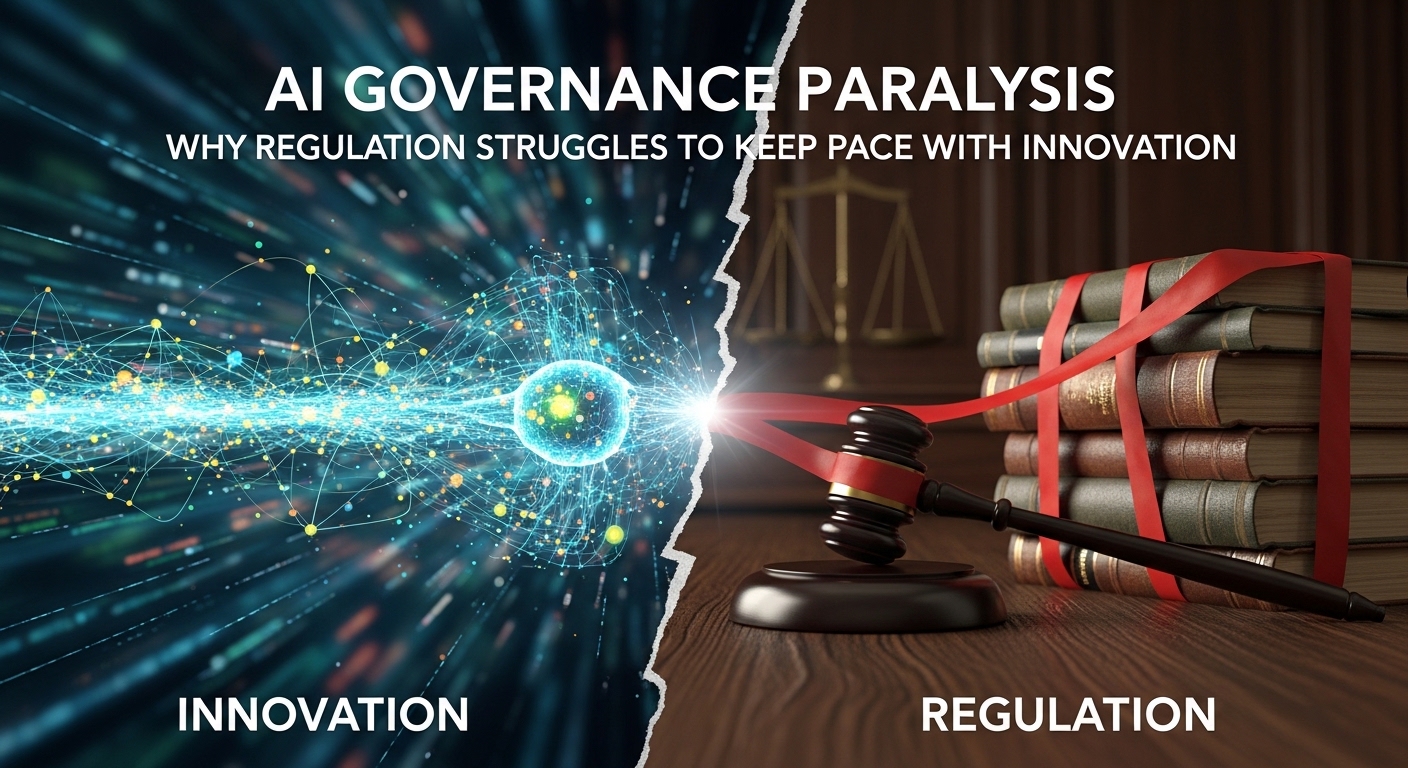
Artificial intelligence is advancing at a remarkable speed, transforming industries, economies, and daily life. From automated customer service systems to predictive analytics in healthcare, AI technologies are becoming deeply embedded in modern society. Yet while innovation accelerates, regulatory systems often struggle to respond effectively. This growing gap has led to what many experts describe as ai governance paralysis. Policymakers, organizations, and institutions face difficulties in creating clear frameworks that balance innovation with accountability. Understanding the causes and consequences of ai governance paralysis is essential for building responsible AI ecosystems that protect public interests without slowing technological progress.
Defining AI Governance Paralysis
AI governance paralysis refers to a state in which regulatory bodies and decision-makers become unable or unwilling to implement timely and effective policies for artificial intelligence oversight. This paralysis may stem from uncertainty, lack of expertise, political disagreements, or fear of hindering innovation. As AI systems grow more complex, lawmakers often struggle to fully understand their implications. The result is delayed regulation or overly cautious approaches that fail to address urgent concerns. AI governance paralysis creates ambiguity for businesses and developers, leaving them without clear guidance on ethical standards, compliance expectations, or long-term accountability measures.
The Rapid Pace of AI Innovation
One of the primary drivers of ai governance paralysis is the extraordinary speed of technological advancement. Machine learning models, generative AI tools, and automated decision systems evolve faster than legislative processes. Governments typically require extensive consultations, research, and debate before passing new laws. By the time policies are finalized, technologies may have already changed significantly. This mismatch creates a reactive regulatory environment rather than a proactive one. As innovation continues to outpace oversight, policymakers face increasing pressure to develop flexible frameworks that can adapt to emerging capabilities without becoming obsolete soon after implementation.
Political and Institutional Challenges
Political dynamics contribute significantly to ai governance paralysis. Different stakeholders often hold conflicting views on privacy, economic growth, national security, and innovation freedom. Reaching consensus among lawmakers can be difficult, especially when AI regulation intersects with global competition. Institutional limitations also play a role, as many agencies lack specialized technical knowledge needed to evaluate complex AI systems. Limited resources and bureaucratic processes further slow decision-making. When governance structures are fragmented or unclear, regulatory action becomes inconsistent. These political and institutional barriers create uncertainty for industries seeking stable and predictable policy environments.
Ethical Concerns and Regulatory Uncertainty
Ethical debates surrounding artificial intelligence intensify ai governance paralysis. Questions about data privacy, algorithmic bias, transparency, and accountability remain unresolved in many jurisdictions. Policymakers must consider diverse perspectives, including those of businesses, civil society, and academic experts. However, prolonged ethical discussions can delay concrete regulatory action. At the same time, companies may hesitate to innovate boldly due to uncertain legal expectations. This environment of ambiguity benefits neither regulators nor developers. Clear ethical guidelines and shared principles are essential to overcome stagnation and ensure that AI technologies operate responsibly and fairly.
Economic Implications of Delayed Regulation
AI governance paralysis can have significant economic consequences. Without consistent rules, companies may face uneven competition or regulatory surprises that disrupt long-term planning. Startups may struggle to attract investment if legal frameworks remain unclear. International trade can also be affected, as countries adopt varying standards for AI oversight. Businesses operating across borders must navigate complex compliance requirements, increasing operational costs. At the same time, insufficient regulation may expose markets to harmful practices that erode public trust. Balanced and timely governance supports economic stability while encouraging sustainable innovation across sectors.
The Global Dimension of AI Governance
Artificial intelligence is not confined by national borders, making governance a global challenge. AI governance paralysis often arises when countries fail to coordinate their regulatory approaches. Differences in cultural values, legal traditions, and economic priorities complicate international collaboration. Some nations prioritize rapid technological growth, while others emphasize strict oversight and data protection. Without global dialogue and shared standards, fragmented regulations can slow innovation and create compliance burdens. International cooperation and multilateral agreements may help reduce paralysis by fostering harmonized guidelines that promote both innovation and ethical responsibility in the global AI landscape.
Building Adaptive Regulatory Frameworks
Overcoming ai governance paralysis requires adaptive and forward-looking regulatory strategies. Instead of rigid laws that quickly become outdated, policymakers can develop flexible frameworks that evolve with technological progress. Regulatory sandboxes allow innovators to test AI systems under supervised conditions while gathering valuable data for policymakers. Continuous consultation with industry experts and academic researchers enhances technical understanding. Clear accountability mechanisms ensure that AI systems remain transparent and fair. By embracing dynamic governance models, authorities can respond more effectively to emerging challenges without stifling creativity or economic growth.
The Role of Industry Self-Regulation
Industry participation is crucial in addressing ai governance paralysis. Technology companies can adopt voluntary ethical standards and internal oversight mechanisms to complement formal regulations. Transparent reporting practices, independent audits, and responsible AI development guidelines demonstrate commitment to accountability. Self-regulation cannot replace government oversight, but it can accelerate progress while formal policies are being developed. Collaboration between private and public sectors encourages knowledge sharing and builds trust. When organizations proactively implement ethical safeguards, they reduce risks and help bridge the gap created by slow regulatory processes.
Public Awareness and Accountability
Public engagement plays a significant role in overcoming ai governance paralysis. Informed citizens can influence policy discussions and demand responsible AI practices. Media coverage, educational initiatives, and transparent communication from technology companies increase awareness of AI’s societal impact. When the public understands both the benefits and risks of artificial intelligence, meaningful dialogue becomes possible. Accountability mechanisms, including public consultations and independent review boards, strengthen democratic oversight. Active civic participation encourages policymakers to act decisively rather than delay difficult decisions, reducing stagnation in governance processes.
Conclusion
Ai governance paralysis reflects the complex challenges of regulating rapidly evolving technologies. Political disagreements, institutional limitations, ethical debates, and global coordination issues all contribute to delayed action. However, inaction carries economic, social, and ethical risks. By adopting adaptive frameworks, encouraging industry responsibility, and promoting international collaboration, policymakers can overcome stagnation and build effective oversight systems. Balanced governance does not hinder innovation; it supports sustainable growth and public trust. Addressing ai governance paralysis is essential for ensuring that artificial intelligence develops in ways that benefit society while minimizing potential harm.