
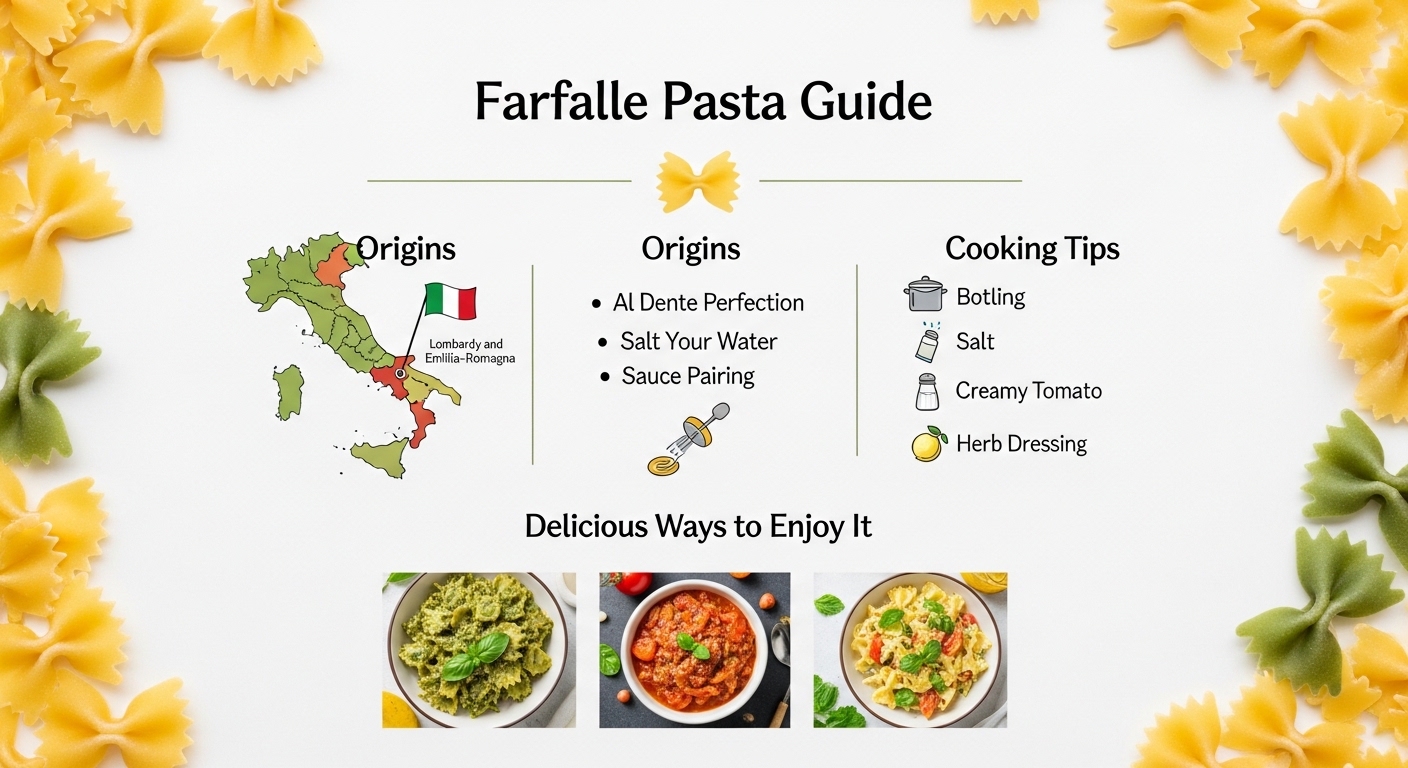
Farfalle is one of the most recognizable pasta shapes in the world, loved for its unique bow-tie appearance and versatility in cooking. Originating from Italy, farfalle has become a staple in many kitchens due to its ability to pair well with a variety of sauces and ingredients. Its distinctive shape not only adds visual appeal but also enhances texture, making every bite more enjoyable. Whether used in creamy dishes, salads, or light sauces, farfalle continues to be a favorite choice for home cooks and chefs alike across different cuisines.
The Origin and History of Farfalle
Farfalle traces its roots back to the northern regions of Italy, particularly Lombardy and Emilia-Romagna. The name farfalle means butterflies in Italian, inspired by the pasta’s shape that resembles delicate wings. Traditionally, this pasta was made by hand using simple ingredients such as flour and eggs. Over time, it gained popularity beyond Italy and became widely produced and distributed around the world. Its long history reflects the rich culinary traditions of Italian cuisine, where pasta shapes are carefully designed to complement different types of sauces and cooking styles.
What Makes Farfalle Unique
The unique shape of farfalle sets it apart from other types of pasta. Its pinched center and wide edges create a texture that holds sauces effectively, allowing flavors to coat each piece evenly. This design also provides a pleasing combination of soft and slightly firm textures in every bite. Farfalle is visually appealing, making it a popular choice for dishes where presentation matters. Its structure allows it to work well with both light and heavy sauces, giving it versatility that few other pasta shapes can match in everyday cooking.
Nutritional Value of Farfalle
Farfalle provides a good source of carbohydrates, which are essential for energy. It is typically made from durum wheat, offering a moderate amount of protein and fiber depending on the variety. Whole wheat versions of farfalle provide additional nutrients and are often chosen for a healthier option. When paired with vegetables, lean proteins, and healthy fats, farfalle can be part of a balanced meal. Its nutritional value makes it suitable for a wide range of diets, offering both energy and satisfaction while maintaining flexibility in meal planning.
Popular Dishes Made with Farfalle
Farfalle is used in a variety of popular dishes that highlight its versatility. It is commonly featured in creamy pasta recipes, where its shape helps capture rich sauces. It is also widely used in pasta salads, combining fresh vegetables, herbs, and light dressings. In addition, pairs well with tomato-based sauces and seafood dishes. Its adaptability allows it to be used in both hot and cold meals, making it a favorite ingredient in many kitchens. This wide range of uses contributes to its popularity worldwide.
How to Cook Farfalle Perfectly
Cooking farfalle properly is essential to achieve the best texture and flavor. It should be boiled in salted water until it reaches an al dente consistency, which means it is tender but still slightly firm. Overcooking can cause the pasta to lose its shape and texture, while undercooking may result in a hard center. Stirring occasionally during cooking prevents sticking. Once cooked, should be drained and combined with sauce immediately to absorb flavors. Following these simple steps ensures a satisfying and well-prepared dish every time.
Pairing Farfalle with the Right Sauces
Farfalle pairs well with a wide range of sauces due to its unique shape and texture. Cream-based sauces cling to its surface, creating a rich and satisfying dish. Light olive oil sauces with herbs and vegetables highlight its delicate structure. Tomato-based sauces also work well, offering a balanced and flavorful combination. The versatility of allows it to complement both simple and complex recipes. Choosing the right sauce enhances the overall dining experience, making each meal more enjoyable and visually appealing.
Farfalle in Modern Cuisine
In modern cuisine, continues to evolve as chefs experiment with new flavors and presentation styles. It is often used in fusion dishes that combine traditional Italian techniques with international ingredients. Creative recipes may include unique sauces, fresh herbs, and innovative cooking methods. Farfalle is also popular in healthy meal options, where it is paired with fresh vegetables and lean proteins. Its adaptability makes it a valuable ingredient in contemporary cooking, allowing chefs and home cooks to explore new culinary possibilities while maintaining its classic appeal.
Tips for Storing and Preserving Farfalle
Proper storage of farfalle helps maintain its quality and freshness. Dry farfalle should be kept in an airtight container in a cool, dry place to prevent moisture and contamination. Cooked can be stored in the refrigerator for a short period, typically in a sealed container. Reheating should be done carefully to preserve texture and flavor. Avoiding exposure to air and humidity ensures that the pasta remains in good condition. These storage practices help extend the shelf life of and maintain its taste and quality.
Why Farfalle Remains a Global Favorite
Farfalle remains a global favorite because of its versatility, appealing shape, and ease of use. It fits well into a wide range of recipes, making it suitable for different cuisines and cooking styles. Its ability to hold sauces and provide a pleasant texture adds to its popularity. Farfalle is also easy to prepare, making it accessible to both beginners and experienced cooks. Its consistent quality and adaptability have helped it maintain its place as a beloved pasta choice in kitchens around the world.
Conclusion
Farfalle is more than just a pasta shape; it is a symbol of creativity and versatility in cooking. From its origins in Italy to its widespread use today, it continues to inspire a variety of delicious dishes. Its unique design, nutritional value, and adaptability make it a valuable ingredient in both traditional and modern cuisine. By understanding how to cook and pair effectively, anyone can create satisfying and visually appealing meals. Its lasting popularity reflects its ability to bring flavor, texture, and enjoyment to the dining experience.