
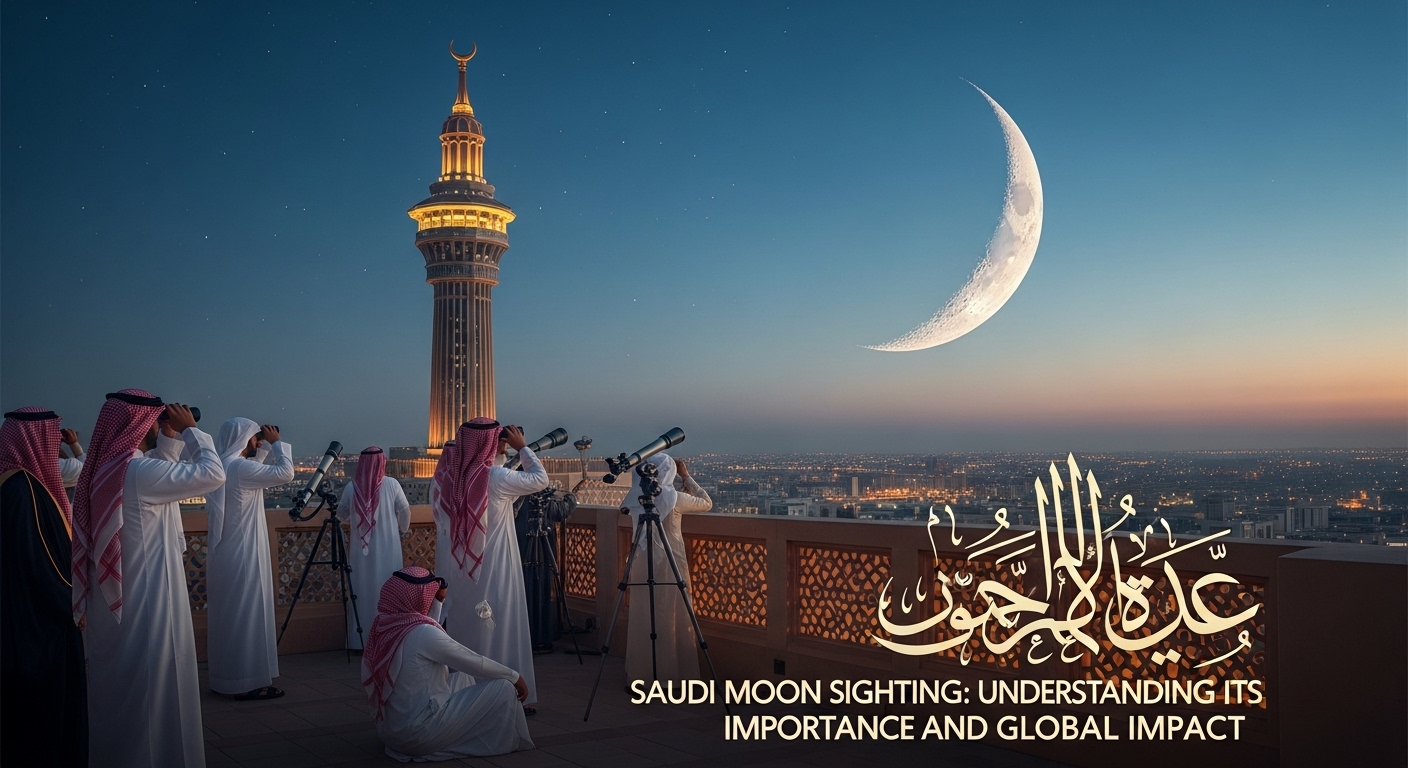
The tradition of observing the moon holds deep significance in Islamic culture, and saudi moon sighting plays a central role in determining important religious events. Millions of Muslims around the world rely on these announcements to begin and end sacred months such as Ramadan and Dhul Hijjah. The process involves both traditional observation and modern methods, creating a unique blend of faith and science. Understanding how saudi moon sighting works helps people appreciate its importance in daily life and religious practices. Its meaning, process, and influence across the global Muslim community.
The Meaning of Saudi Moon Sighting
Saudi moon sighting refers to the official observation of the الهلال, or new crescent moon, in Saudi Arabia to mark the beginning of Islamic lunar months. This practice is deeply rooted in Islamic teachings, where the lunar calendar determines the timing of religious events. Unlike the Gregorian calendar, which follows the solar cycle, the Islamic calendar depends entirely on moon phases. The sighting confirms the start of a new month, making it a crucial event for Muslims. The announcement made in Saudi Arabia often carries significant influence, as many countries look to it for guidance on religious observances.
Religious Significance in Islam
The importance of saudi moon sighting is closely tied to its role in Islamic worship and rituals. Key events such as the beginning of Ramadan, Eid al-Fitr, and Eid al-Adha depend on the confirmed sighting of the moon. Muslims observe fasting, prayers, and celebrations based on these dates. The process reflects obedience to religious teachings and strengthens unity among believers. It also highlights the importance of community, as people gather to observe or await official announcements. This tradition has been followed for centuries, maintaining its relevance and importance in modern times across diverse Muslim populations worldwide.
How the Moon Sighting Process Works
The process of saudi moon sighting involves trained observers who search for the crescent moon after sunset on specific dates. Committees are formed to verify sightings using both naked-eye observation and telescopes. Witnesses provide testimonies, which are then reviewed by religious authorities before an official declaration is made. In recent years, technology has supported this process, but traditional methods remain essential. This careful verification ensures accuracy and maintains the integrity of the practice. The combination of observation, testimony, and official approval creates a structured and reliable system for determining the start of each lunar month.
Role of Saudi Authorities in Announcements
Saudi authorities play a central role in confirming and announcing the results of saudi moon sighting. Religious councils and judicial committees are responsible for reviewing evidence and making final decisions. Once the moon is sighted and verified, an official statement is released through media channels. This announcement is closely followed by Muslims around the world, as it determines the start of important religious events. The authority and credibility of these institutions contribute to their global influence. Their role ensures consistency and clarity, helping communities prepare for upcoming religious observances with confidence and unity.
Global Influence on Muslim Communities
Saudi moon sighting has a significant impact on Muslim communities beyond Saudi Arabia. Many countries align their religious calendars with these announcements, especially for major events like Ramadan and Eid. This shared reference point helps create a sense of unity among Muslims worldwide. However, some regions choose to rely on local sightings or astronomical calculations, leading to slight variations in dates. Despite these differences, the influence of Saudi announcements remains strong. It reflects the interconnected nature of the global Muslim community and highlights the importance of coordination in observing religious traditions across different regions.
Differences Between Local and Saudi Sightings
While saudi moon sighting is widely recognized, not all countries follow it exclusively. Some nations prefer local moon sightings to determine their own lunar calendar. This approach considers geographical differences that may affect visibility of the crescent moon. As a result, there can be variations in the start and end dates of Islamic months between regions. These differences are generally accepted within the Muslim world, as both methods are rooted in valid interpretations of Islamic teachings. Understanding these variations helps explain why religious events may be observed on different days in different parts of the world.
The Role of Technology in Moon Observation
Modern technology has enhanced the process of saudi moon sighting by improving accuracy and reliability. Telescopes, astronomical calculations, and digital imaging tools are now used alongside traditional methods. These advancements help observers detect the crescent moon more effectively, especially in challenging conditions. Despite these innovations, human observation remains a key component of the process. Technology serves as a supportive tool rather than a replacement for traditional practices. This balance between science and tradition ensures that the process remains both accurate and faithful to its religious roots, adapting to modern times while preserving its original essence.
Challenges in Moon Sighting Practices
Saudi moon sighting faces several challenges, including weather conditions, visibility issues, and differing interpretations of criteria for confirmation. Clouds, dust, and atmospheric conditions can make it difficult to see the crescent moon, leading to uncertainty. Additionally, اختلاف in scholarly opinions about acceptable methods can create differences in announcements. These challenges require careful consideration and coordination among observers and authorities. Efforts are continuously made to improve the process and reduce discrepancies. Understanding these challenges provides insight into the complexity of moon sighting and the dedication involved in maintaining its accuracy and reliability.
Cultural and Social Importance of the Event
Beyond its religious role, saudi moon sighting holds cultural and social importance in Muslim societies. The anticipation of the announcement creates a sense of excitement and unity among communities. Families and friends gather to prepare for upcoming events, whether it is the start of fasting or a festive celebration. The moment of confirmation often brings joy and spiritual reflection. This shared experience strengthens social bonds and reinforces cultural traditions. It also connects generations, as the practice is passed down and observed collectively. The cultural significance adds depth to the religious importance of the moon sighting process.
Conclusion
Saudi moon sighting remains a vital practice that connects faith, tradition, and community across the Muslim world. Its role in determining key religious events highlights its importance in daily life and spiritual observance. Despite challenges and regional differences, the process continues to unite millions of people through shared traditions and beliefs. By combining traditional methods with modern technology, it maintains both accuracy and authenticity. Understanding its significance helps foster appreciation for this long-standing practice and its impact on global Muslim communities, ensuring it continues to hold relevance in an ever-changing world.